Why Nasal Breathing Can Improve Your Well-being
Breathing — something we do around 20,000 times a day, usually without noticing. But although it seems so natural, the way we breathe is of enormous importance for our health, our energy level — and even for our facial shape.
Breathing Influences Our Nervous System
Our breathing not only controls oxygen supply — it also directly influences our autonomic nervous system. This system controls two important states:
“Fight or Flight” — the activity mode: heart rate and stress levels increase.
“Rest and Digest” — the recovery mode: body regenerates, immune system works, sleep deepens.
Surprising? Perhaps. But: How we breathe — through the nose or mouth — helps determine which of these states we are in.
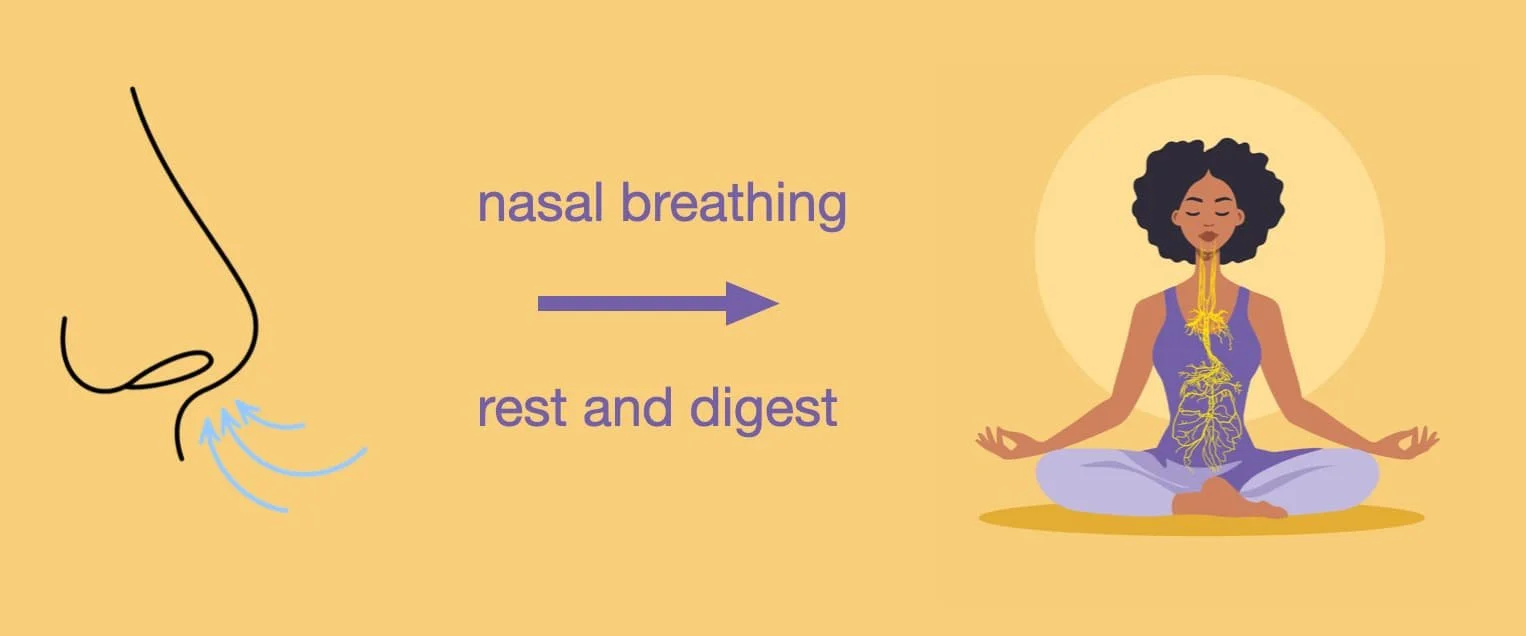
Nasal Breathing Puts the Body into Recovery Mode
Nasal breathing activates the parasympathetic nervous system, the system responsible for rest and regeneration. This is especially important during sleep, because only then can the body truly regenerate, strengthen the immune system, and clear the brain.
Those who breathe regularly through the nose — especially at night — benefit from:
Deeper, more restful sleep
Improved oxygen intake
More energy during the day

Mouth Breathing, on the other hand, Disrupts Sleep — and More
Conversely, those who predominantly breathe through their mouth, especially during sleep, risk a whole range of negative effects in the long run:
Daytime fatigue and concentration problems
Dry mouth and increased risk of cavities
Frequent upper respiratory infections
Altered facial shape (e.g., elongated face, recessed chin, narrow palate)
Especially in children, chronic mouth breathing can even permanently influence the development of the jaw and face.
What can be done to breathe better through the nose?
Persistently restricted nasal breathing is not inevitable – it often has structural causes, for example:
Narrow nasal passage
Too narrow upper jaw
Constricted upper airways
As an orthodontist, I therefore examine not only the teeth but also the upper airways. This is because the upper jaw is an important part of the nasal structure. If it is too narrow, the nasal passage also remains constricted – with all the described consequences.
In such cases, a gentle expansion of the upper jaw (e.g., through distraction osteogenesis with mini-implants) can offer several benefits:
Freer nasal breathing
Improved sleep quality
Stable bite and more aesthetic tooth alignment
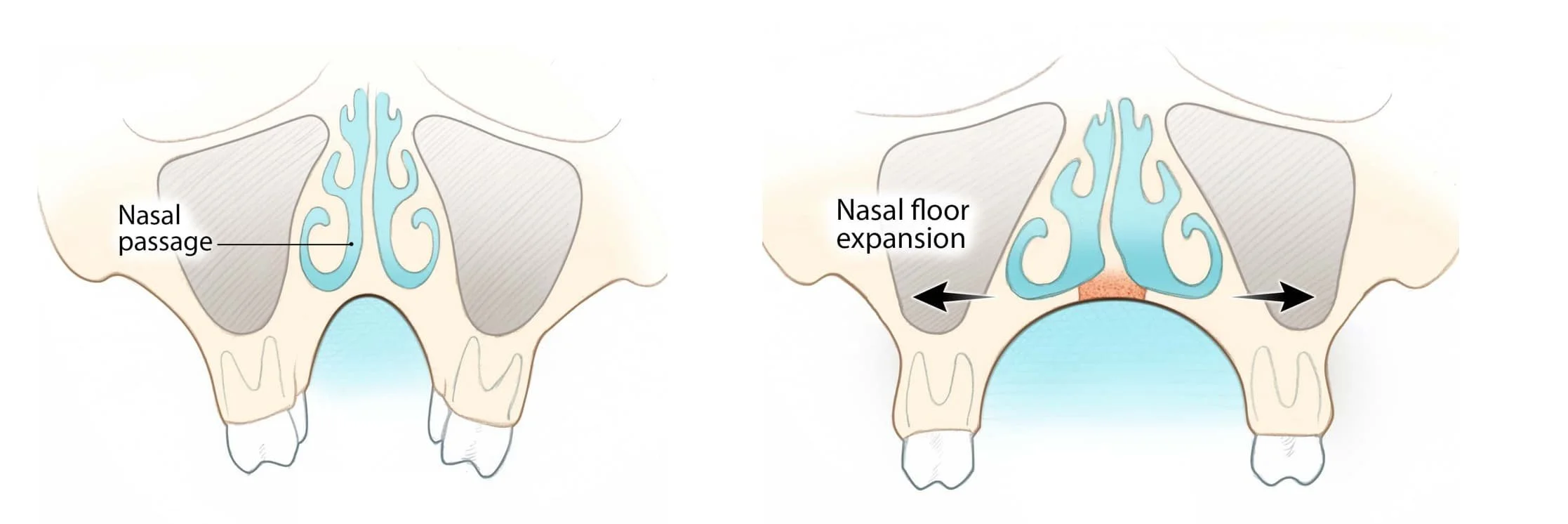
Three birds with one stone: Breathing – Bite – Aesthetics
If you often wake up tired in the morning, breathe through your mouth, or struggle with sleep problems, the reason might not (only) lie in the lungs or nose – but in the jaw.