Alternative to Jaw Surgery: Modern Paths to a Broad Smile
Many adults who suffer from crooked teeth, a narrow smile, or even discomfort when chewing or breathing often receive the recommendation: “Your upper jaw is too narrow – it needs to be surgically expanded.” In traditional orthodontics, “surgical” often means: The jaw must be surgically cut – commonly known as “jaw breaking.”
But why?
Why is this even done?
In many adults, the upper jaw is too narrow. This results in teeth having insufficient space, becoming crooked, or biting incorrectly – a so-called malocclusion. The smile also often appears narrower than it should.
Imagine a child's room planned for a toddler – small, compact, everything fits perfectly. But the child grows, gets more toys, books, a desk.
Suddenly, the room is too cramped.
It's the same with a narrow upper jaw in adulthood:
The jaw was too small during development – but the teeth are normal size. Now they are crooked, crowded, and the bite is no longer correct. One feels uncomfortable – aesthetically and functionally.
The solution? Don't remove the desk, but expand the room.
With modern methods, this is possible today – entirely without breaking down walls.
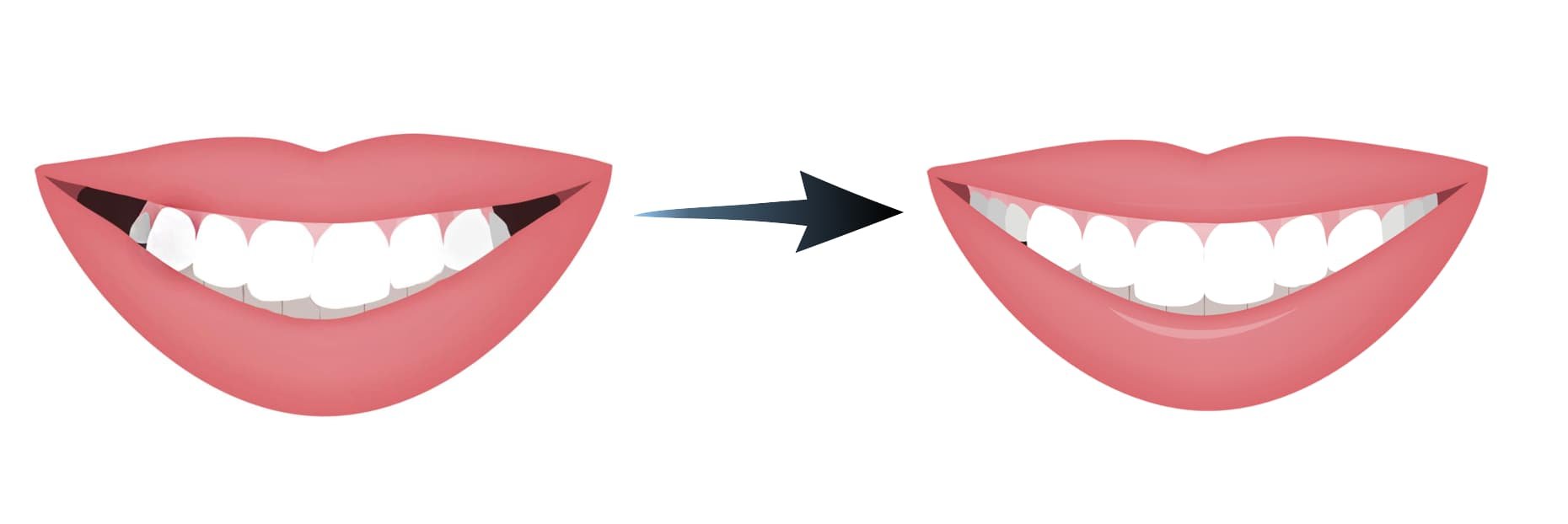
left: narrow smile, crowded teeth → right: broad smile, all teeth have space in the jaw.
Previously, this meant: breaking the jaw
Because the so-called growth plates of the bone are already ossified in adults, they could not be gently opened in the past, as in children or adolescents. Therefore, the surgical method was used: The bone was cut in several places to artificially make the suture “movable” again.
Today, this is often possible entirely without surgery
Thanks to modern techniques, this drastic step is no longer necessary in many cases.
Through the targeted use of mini-implants in the palatal area, the bone can be reactivated – entirely without incisions. With a special biological protocol (“Force-Controlled Polycyclic Protocol” Dr. Heinz Winsauer et al.), controlled tension is applied to the bone over several weeks. This causes the growth plate to “react” again – very similar to adolescence.
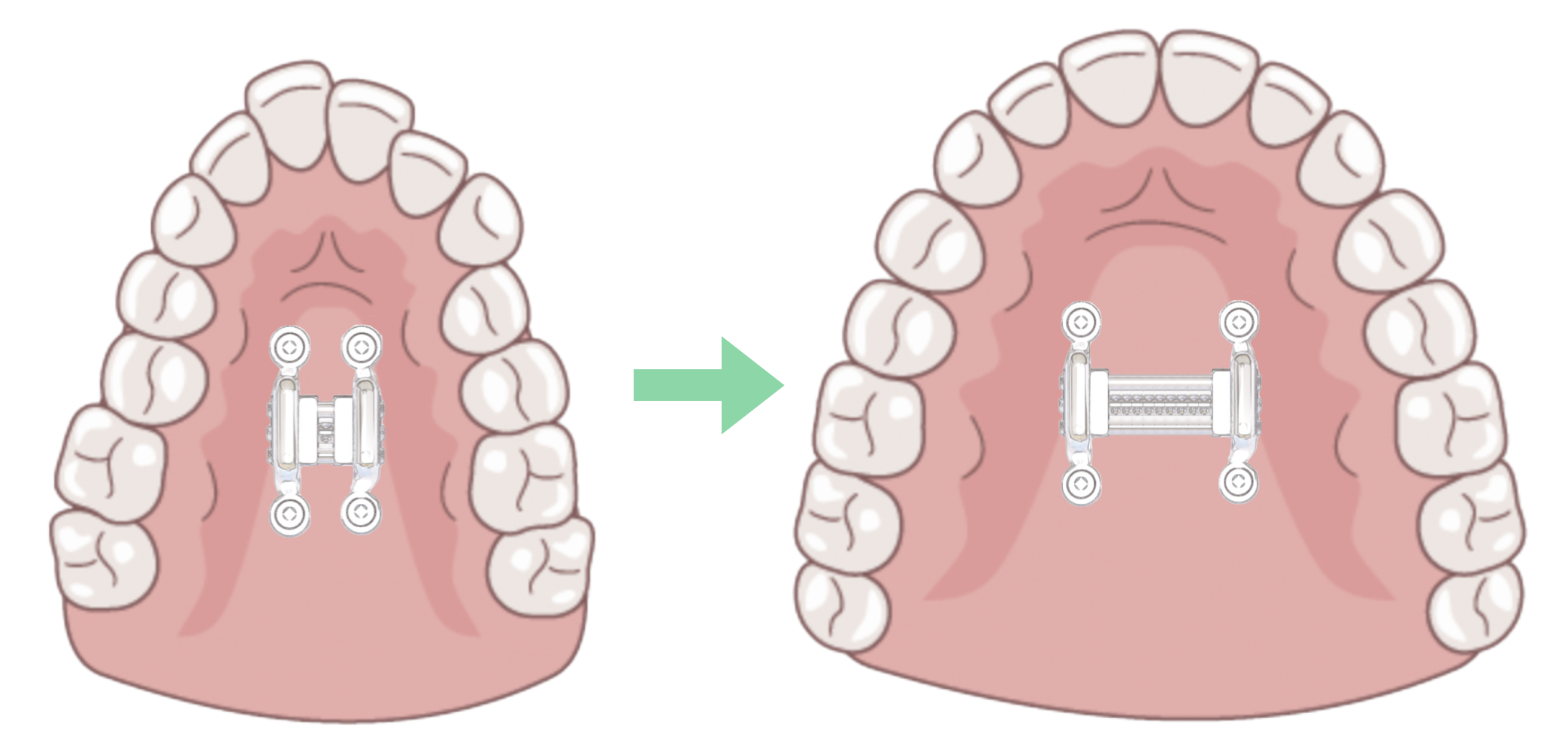
left: expander on mini-implants to create the width the teeth need – entirely without bone incisions.
What does this specifically mean for you as a patient?
No surgery
No bone incisions
No hospital stay
No scars
And yet: more space for your teeth, a broader smile, and better function
Modern orthodontics therefore offers gentle alternatives where drastic interventions were previously necessary. It is important that your situation is individually analyzed – because not every method suits everyone. But it's worth asking: Can it be done without surgery for me too?
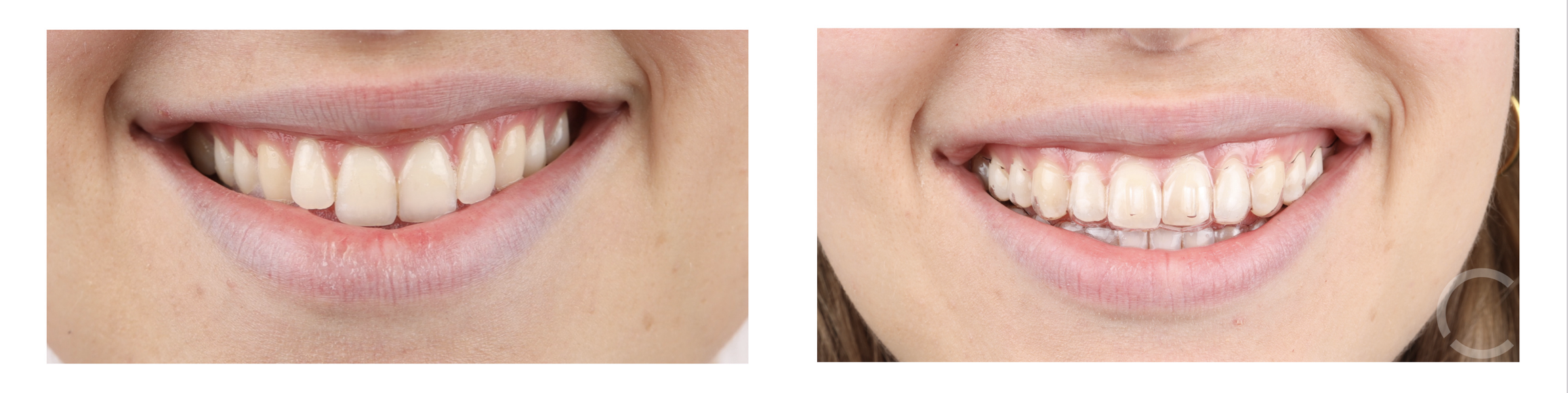
even during treatment (image on the right), patients are pleased with a broader
smile.